In this comprehensive guide, we break down the technical and practical differences between these two types of vacuum pumps. We’ll help you determine which option best fits your workflow—whether you’re servicing residential mini splits, commercial refrigeration, or complex VRF systems. As a trusted name in the industry, VacuumWell manufactures both high-performance single and dual-stage pumps designed for demanding field conditions. Let’s dive in.
What is a Single Stage Vacuum Pump?
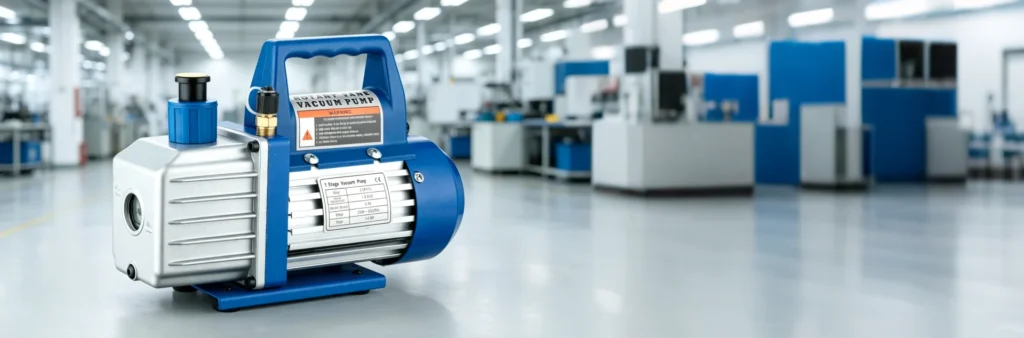
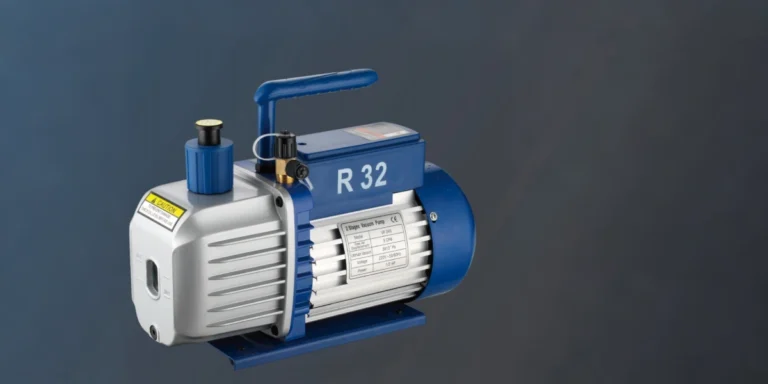
A single stage vacuum pump uses one set of rotors and vanes to compress air and gas molecules in a single step. This design is simpler, cost-effective, and ideal for routine HVAC maintenance tasks. Single-stage pumps create a vacuum by drawing air into the cylinder through the intake port, compressing it, and exhausting it to the atmosphere in one cycle.
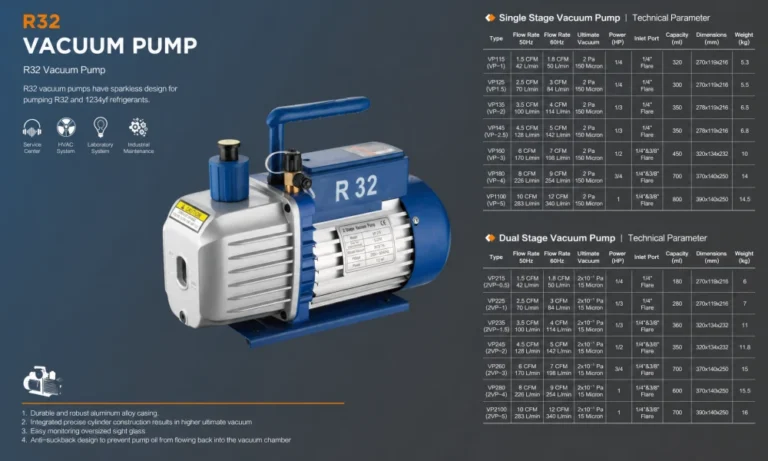
VacuumWell’s single stage series includes the VP115 through VP1100 models, covering flow rates from 1.5 CFM to 12 CFM. These pumps are engineered for reliability and are a popular choice for many field technicians.
Key specifications for VacuumWell single stage vacuum pumps:
- Ultimate vacuum: 150 microns (2 Pa)
- Power range: 1/4 HP to 1 HP
- Oil capacity: 230 ml to 800 ml depending on model
- Inlet ports: 1/4″ flare and 3/8″ flare options
Advantages of a single stage vacuum pump:
- Lower initial cost: More budget-friendly for technicians just starting out or for small service operations.
- Lightweight and portable: Models like the SVP115 weigh as little as 3.7 kg, making them easy to transport.
- Simple maintenance: Fewer components mean easier oil changes and service checks.
- Sufficient for standard tasks: Reaches 150 microns, which is adequate for many residential and automotive applications.
Common applications for single stage pumps:
- Residential HVAC systems and split systems
- Mini split installations
- Automotive air conditioning servicing
- Basic degassing processes
- Routine system maintenance where deep vacuum isn’t required
When to choose a single stage pump: If you primarily work on smaller residential systems, light commercial jobs, or automotive AC, the single-stage pump offers excellent value and reliable performance.
What is a Dual Stage Vacuum Pump?
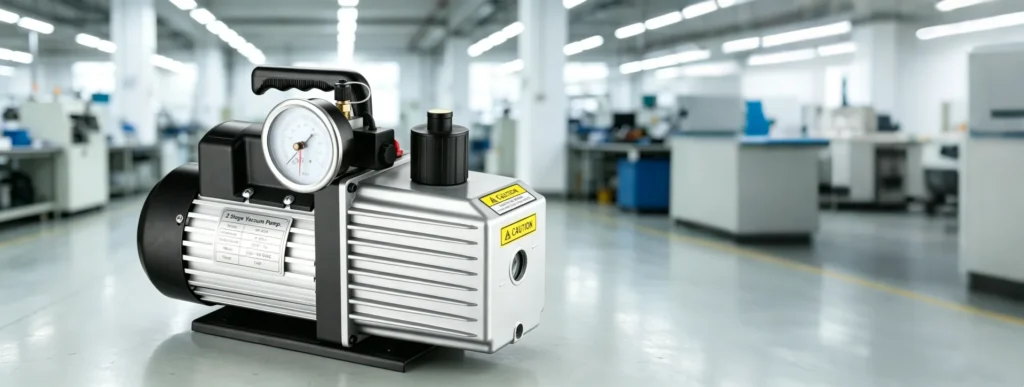
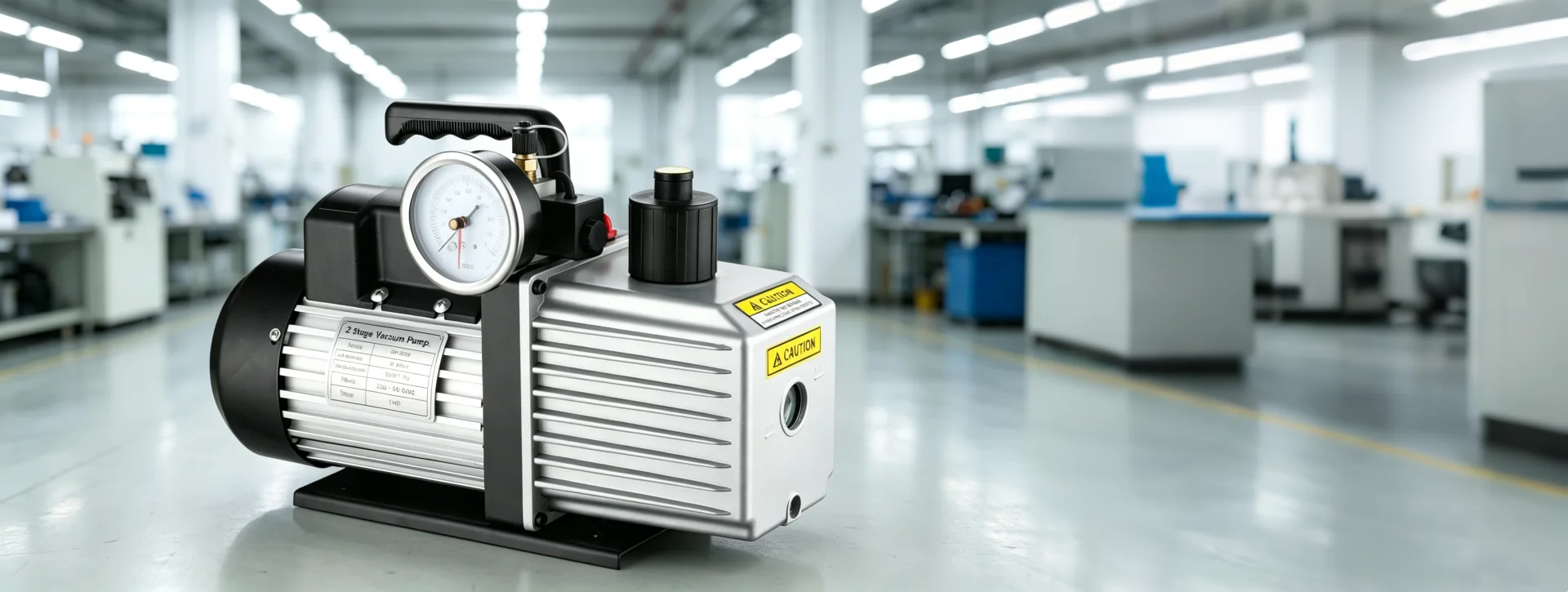
A dual stage vacuum pump features two sets of rotors and vanes operating in series. The gas is partially compressed in the first stage and then passed to the second stage for further compression before being exhausted. This design significantly improves the pump’s ability to achieve a deeper ultimate vacuum and faster pull-down times.
VacuumWell’s dual stage series—VP215 to VP2100—delivers superior performance with the same 1.5 CFM to 12 CFM flow rate range but with enhanced evacuation capabilities.
Key specifications for VacuumWell dual stage vacuum pumps:
- Ultimate vacuum: 15 microns (2×10⁻¹ Pa)
- Power range: 1/4 HP to 1 HP
- Oil capacity: 180 ml to 700 ml depending on model
- Inlet ports: 1/4″ flare and 3/8″ flare options
Advantages of a dual stage vacuum pump:
- Deeper vacuum: Achieves 15 microns—ten times deeper than a single-stage pump—essential for moisture and contaminant removal.
- Faster evacuation: The two-stage compression process removes air and moisture more efficiently, speeding up the overall process.
- Superior moisture removal: Lower pressure allows water vapor to boil off at lower temperatures, preventing freeze-up and ensuring a thoroughly dry system.
- Better for critical systems: Ensures system integrity in applications where even trace moisture can cause failure.
Common applications for dual stage pumps:
- Commercial HVAC systems
- Large refrigeration systems and cold storage
- VRF and multi-split systems
- Industrial process vacuum
- Laboratory and research applications requiring deep vacuum
- Systems with long line sets or large volume
When to choose a dual stage pump: If you specialize in commercial work, refrigeration, or any application that demands thorough moisture removal and a deeper vacuum, the dual-stage pump is the industry standard and a worthwhile investment.
Single Stage vs Dual Stage Vacuum Pump: Comparison Table
| Feature | Single Stage Vacuum Pump | Dual Stage Vacuum Pump |
|---|---|---|
| Ultimate Vacuum | 150 microns (2 Pa) | 15 microns (2×10⁻¹ Pa) |
| Pump Structure | Single compression stage | Two compression stages in series |
| Evacuation Speed | Slower; limited by single-stage capacity | Faster; optimized air and moisture removal |
| Moisture Removal Ability | Moderate; suitable for dry conditions | Excellent; essential for humid environments |
| Price Level | Lower cost | Higher cost, but better long-term value |
| Weight | Lighter (e.g., 3.7–14.5 kg) | Heavier (e.g., 6–16 kg) |
| Application Scope | Residential HVAC, mini splits, automotive AC | Commercial HVAC, VRF, refrigeration, industrial systems |
Technical Specification Overview
Both single and dual-stage vacuum pumps from VacuumWell are available in a range of flow rates from 1.5 CFM to 12 CFM. This wide selection allows technicians to match pump capacity to system size and job demands.
What does CFM mean? CFM stands for Cubic Feet per Minute—a measurement of the pump’s volumetric flow rate at a given inlet pressure. In simple terms, it indicates how quickly the pump can move air out of the system. Higher CFM means faster evacuation, especially in larger systems with greater internal volume.
How to choose the right CFM:
- Small systems (mini splits, small refrigerators): 1.5–3 CFM
- Residential HVAC units: 4–6 CFM
- Commercial and large refrigeration systems: 6–12 CFM
Keep in mind that while higher CFM reduces evacuation time, the ultimate vacuum level (measured in microns) determines system dryness and is equally important for system longevity.
Key Product Features of VacuumWell Pumps
VacuumWell has engineered its pumps with features that enhance performance, durability, and ease of use across the entire product line. Whether you choose a single or dual-stage model, these design elements ensure reliable operation in the field:
- Durable and robust aluminum alloy casing: Resists impact, corrosion, and heat. Built to withstand daily use in harsh job site conditions.
- Integrated precise cylinder construction: Optimized machining and tight tolerances result in higher ultimate vacuum and consistent performance over the pump’s lifetime.
- Oversized oil sight glass: Provides clear visibility of oil level and condition, simplifying maintenance and preventing oil starvation.
- Anti-suckback design: Prevents pump oil from flowing back into the vacuum chamber when the pump shuts off, protecting system integrity and avoiding contamination.
Application Scenarios
Residential HVAC
For most residential systems, a single stage vacuum pump with 4–6 CFM is sufficient. It handles standard split systems, package units, and mini splits with ease. However, if you frequently work in high-humidity regions, upgrading to a dual-stage pump adds extra assurance of moisture removal.
Commercial HVAC
Commercial systems often have larger refrigerant charges, longer line sets, and complex piping arrangements. A dual stage vacuum pump is strongly recommended. The ability to reach 15 microns ensures that moisture and non-condensable gases are thoroughly evacuated, reducing the risk of acid formation and compressor damage.
Refrigeration Maintenance
Walk-in coolers, freezers, and supermarket refrigeration systems demand deep vacuum for proper system cleanup after repairs. Dual-stage pumps are the preferred choice due to their superior moisture handling and faster evacuation times.
Industrial Systems
Industrial applications often involve large diameter piping, high refrigerant volumes, and stringent quality requirements. Both pump types can be used depending on the specific process, but dual-stage pumps are more common due to their deeper vacuum capability and faster pull-down.
Buying Guide: Which Pump Should You Choose?
Choosing the right vacuum pump involves understanding both the system requirements and your typical workflow. A single stage vacuum pump compresses air once and is ideal for basic, smaller tasks like small automotive ACs or light degassing. A dual stage vacuum pump compresses air twice, creating a much deeper vacuum and pulling it much faster. It is the industry standard for demanding applications like commercial HVAC and complex refrigeration.
Consider the following factors:
- System type and size: Larger systems and those with longer piping need higher CFM and deeper vacuum capability.
- Climate conditions: Humid environments require dual-stage pumps for effective moisture removal.
- Frequency of use: High-volume contractors benefit from dual-stage pumps for faster cycle times.
- Budget: Single-stage pumps are cost-effective upfront, but dual-stage models provide better long-term protection for valuable equipment.
Recommendation Table by CFM Range:
| CFM Range | Recommended System Type | Recommended Pump Type |
|---|---|---|
| 1.5–3 CFM | Small AC units, mini splits, domestic refrigeration | Single stage |
| 4–6 CFM | Residential HVAC, light commercial | Single stage or dual stage |
| 6–12 CFM | Commercial systems, large refrigeration, VRF | Dual stage |
Still unsure? For most HVAC professionals, having both a small single-stage pump for service calls and a larger dual-stage pump for major installations is the ideal solution. Browse VacuumWell’s full range of vacuum pumps to find the right fit for your business.
Frequently Asked Questions (FAQ)
What is the difference between single and dual stage vacuum pump?
The main difference lies in the number of compression stages. A single stage vacuum pump compresses gas once, reaching 150 microns. A dual stage vacuum pump compresses gas twice, achieving a much deeper 15-micron vacuum, which allows for faster and more thorough moisture removal.
Is a dual stage vacuum pump worth it?
Yes. While a dual-stage pump costs more upfront, it offers deeper vacuum, faster evacuation, and better moisture removal—all of which protect expensive HVAC and refrigeration equipment from future failures. For professional technicians, it’s a worthwhile investment.
What is 150 micron vs 15 micron?
Microns measure the absolute pressure inside the system after evacuation. 150 microns is suitable for basic tasks, but 15 microns represents a much deeper vacuum that effectively removes moisture and non-condensable gases. A lower micron number means a better vacuum and safer system start-up.
What CFM vacuum pump do I need?
CFM determines how quickly the system can be evacuated. For small systems like mini splits, 1.5–3 CFM is sufficient. Residential HVAC typically requires 4–6 CFM, while commercial and large refrigeration systems benefit from 6–12 CFM.
Can I use a single stage pump for mini split?
Yes, a single stage pump is perfectly suitable for mini split installations. However, if you’re working in humid conditions or want faster cycle times, a dual-stage pump provides added assurance and efficiency.
Which vacuum pump is best for HVAC?
For residential HVAC, a 4–6 CFM single-stage pump works well. For commercial and large-scale systems, a 6–12 CFM dual stage vacuum pump is best. Both types are available from VacuumWell, with options that match every application.
What is the difference between single stage and two stage vacuum pump?
This is the same as the single vs dual-stage comparison. A single-stage pump uses one compression cycle to reach 150 microns, while a two-stage pump uses two cycles to achieve 15 microns, providing faster evacuation and better moisture removal.
How often should I change the oil in my vacuum pump?
Oil should be changed regularly based on usage. As a general rule, change the oil after every major job or when it appears dark or contaminated. Clean oil is essential for achieving rated ultimate vacuum levels and preventing pump wear.
For more detailed product information, view the single stage vacuum pump and dual stage vacuum pump pages directly on the VacuumWell website.