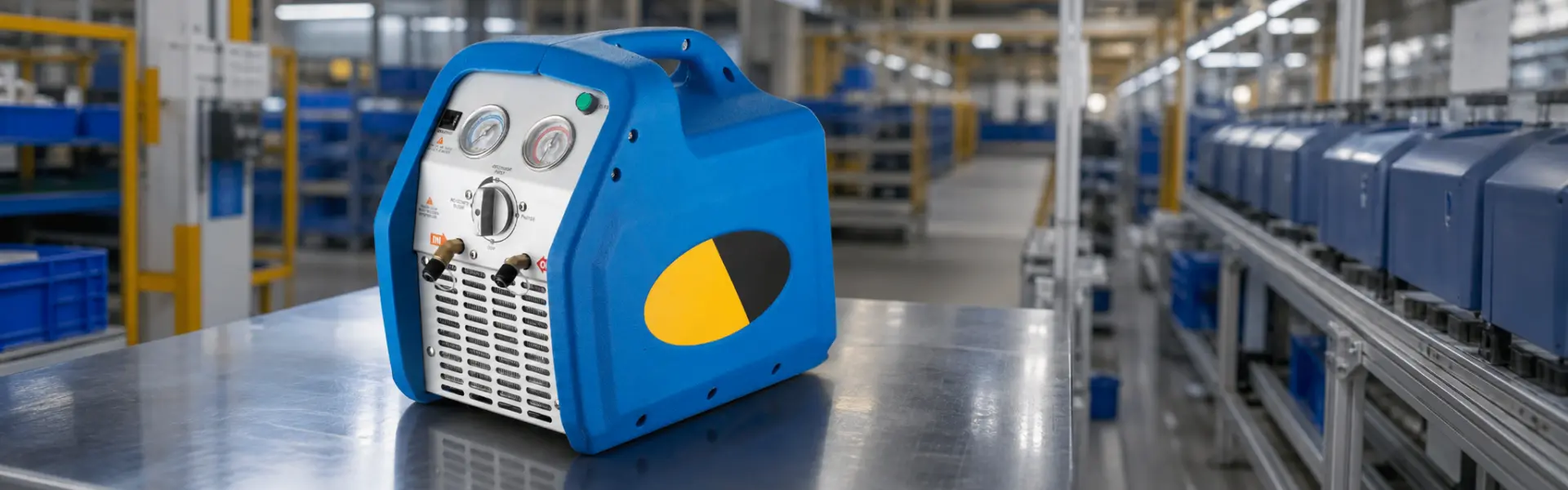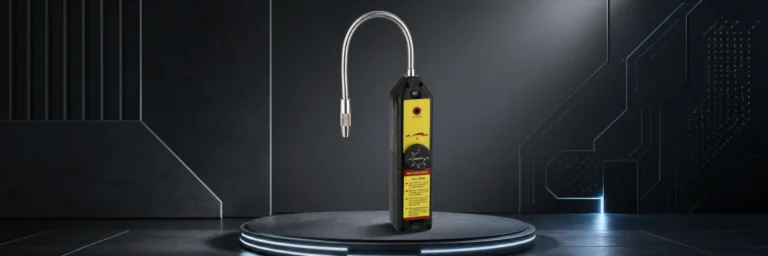
Whether you’re a seasoned HVAC technician or a facility manager overseeing industrial processes, this guide breaks down the key differences, applications, and selection criteria to help you make the right choice for your specific needs. At Vacuumwell, we manufacture both HVAC and industrial-grade vacuum pumps, giving us unique insight into what works best for each application.
Why Choosing the Right Vacuum Pump Matters
The vacuum pump difference between HVAC and industrial applications goes far beyond price tags. Choosing incorrectly can have serious consequences for your work and equipment.
Consequences of an Incorrect Choice
- Poor evacuation efficiency – An undersized or inappropriate pump will take dramatically longer to pull down a system, wasting valuable time on the job and increasing labor costs.
- Equipment damage – Using an industrial vacuum pump on a sensitive HVAC system can introduce contamination or over-evacuate components, leading to premature compressor failure and costly repairs.
- Reduced work productivity – The wrong pump can’t handle the required duty cycle, leading to frequent breakdowns, unexpected downtime, and lost revenue.
Understanding the HVAC vs industrial vacuum pump distinction is the first step toward making an informed purchase decision that protects your investment and ensures job quality. Vacuumwell designs each pump type with its specific application in mind, so you get reliable performance every time.
Application First: HVAC vs Industrial Use Cases
Before diving into specifications, consider where and how you’ll be using the pump. This is the single most important factor in choosing between an HVAC vacuum pump and an industrial vacuum pump.
HVAC Applications
An HVAC vacuum pump is specifically designed to remove air, moisture, and non-condensable gases from refrigeration and air conditioning systems. This process, known as system evacuation, ensures the refrigerant can circulate efficiently and prevents moisture-related damage to compressors. HVAC vacuum pump applications are typically field-service oriented.
Typical HVAC applications include:
- Split AC installation and servicing – Residential and light commercial systems require reliable evacuation before refrigerant charging. Vacuumwell single-stage pumps are ideal for these tasks.
- Heat pump systems – Proper evacuation is critical for heat pump efficiency and longevity, especially in systems using R32 and other new refrigerants.
- Refrigeration maintenance – Walk-in coolers, freezers, and display cases need thorough dehydration during service. Vacuumwell dual-stage pumps excel in these demanding applications.
Industrial Applications
An industrial vacuum pump serves a much broader range of purposes across manufacturing and processing environments. Industrial vacuum pump applications include creating vacuum for material handling, packaging, and various production processes where continuous operation is the norm.
Typical industrial applications include:
- Manufacturing equipment – CNC machines, material handling systems, and pneumatic conveying rely on industrial-grade vacuum.
- Vacuum systems – Centralized vacuum supply for factory-wide operations requires robust, continuous-duty pumps.
- Processing machines – Drying, degassing, and impregnation in industries like food processing, pharmaceuticals, and electronics demand reliable industrial vacuum pumps.
Key Factors When Choosing a Vacuum Pump
When comparing types of vacuum pumps, consider these four critical factors. Vacuumwell recommends evaluating each factor carefully against your specific work environment.
1. Vacuum Level
This is where the vacuum pump difference becomes most apparent.
HVAC systems require specific micron-level vacuums. Most manufacturers recommend pulling down to at least 500 microns, though deeper vacuums below 200 microns are preferred for effective moisture removal. The ability to achieve and hold these levels is essential for system integrity. Vacuumwell dual-stage pumps reach 15 microns for demanding HVAC work.
Industrial applications operate across a wide range of vacuum levels—from rough vacuum (atmosphere to 1.0 mbar) to medium vacuum (1 to 10⁻³ mbar), depending on the specific process. Different technologies like liquid ring, dry claw, or rotary vane pumps suit different vacuum ranges.
2. Operating Time
HVAC work typically involves intermittent operation. Technicians use the pump for 15-30 minutes to evacuate a system, then it sits idle during other tasks. This duty cycle allows for lighter-duty construction and simpler cooling systems. Vacuumwell HVAC pumps are engineered for this stop-start pattern.
Industrial pumps often run continuously, sometimes 24/7. They’re built with heavy-duty components, robust cooling systems, and larger oil reservoirs to handle extended operation without failure. Vacuumwell industrial pumps feature enhanced cooling and larger oil capacities for continuous duty.
3. Port Design
HVAC vacuum pump models typically feature SAE ports (1/4″ and 3/8″ flare) designed to connect directly to manifold gauge sets and service hoses. These standardized connections make setup quick and straightforward for field service. Vacuumwell HVAC pumps include both port sizes for maximum compatibility.
Industrial pumps require larger connections to handle higher flow rates and may use flanged fittings or specialized adapters for integration into fixed piping systems.
4. Mobility
HVAC technicians need portable equipment. A typical HVAC vacuum pump is lightweight, features a carrying handle, and can be easily transported between job sites. Models weighing 5-15 kg are common. Vacuumwell HVAC pumps are designed with rugged handles and balanced weight distribution for easy carrying.
Industrial pumps are usually fixed installations, mounted in place and connected to permanent piping. They may weigh hundreds of kilograms and require dedicated floor space or structural support.
Recommended Vacuum Pump Types
Based on your application, Vacuumwell offers specific pump solutions designed for optimal performance.
For HVAC Technicians
If you’re in the field, these are the types of pumps you should consider from Vacuumwell:
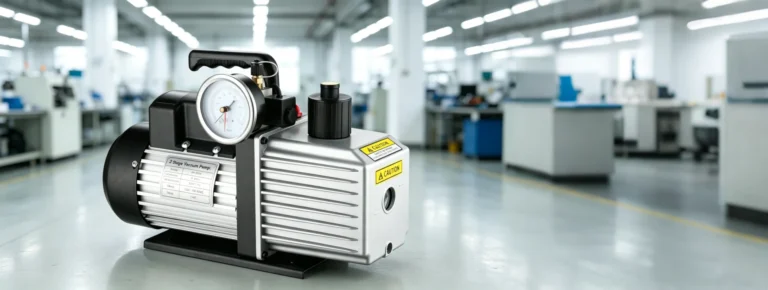
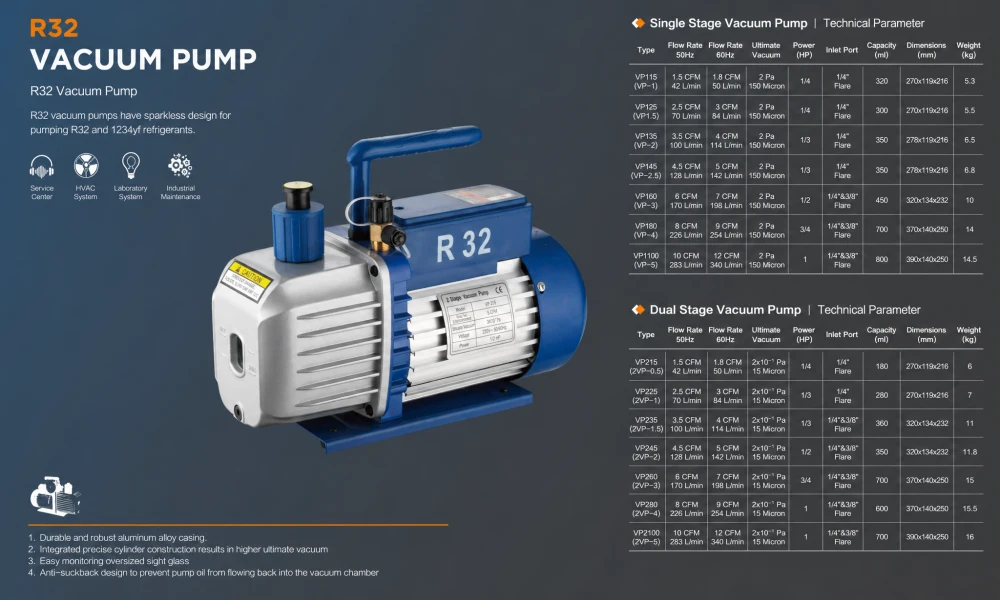
- Two Stage Vacuum Pump – The industry standard for serious HVAC work. Vacuumwell dual-stage compression achieves deeper vacuum levels as low as 15 microns for faster, more thorough moisture removal.
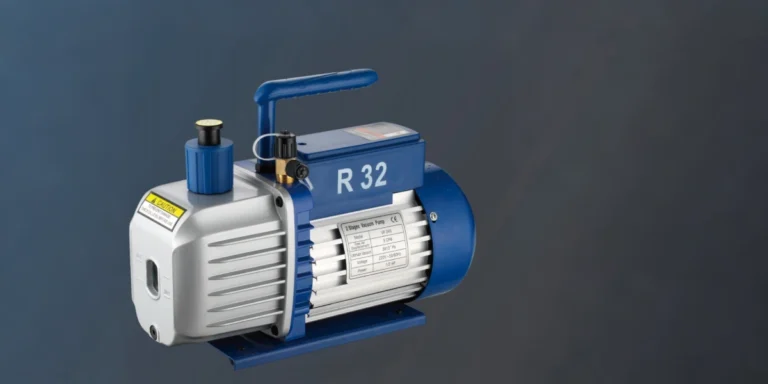
- R32 Vacuum Pump – Specifically designed to handle the higher pressures and characteristics of R32 and other A2L refrigerants. Vacuumwell R32 pumps feature enhanced sealing and full compatibility.
For Factories and Industrial Operations
Industrial environments demand robust, application-specific solutions from Vacuumwell:
- Rotary Vane Vacuum Pump – One of the most common and reliable technologies, suitable for a wide range of industrial applications with ultimate pressures between 0.1 and 0.5 mbar.
- Industrial Vacuum Pump – Whether oil-sealed, dry vane, liquid ring, or screw type, Vacuumwell industrial pumps are built for continuous duty and specific process requirements.
Frequently Asked Questions
Can I use an industrial vacuum pump for R32 systems?
Generally, no. R32 systems have specific requirements for evacuation and require pumps designed to handle the refrigerant’s properties. While some industrial pumps might achieve the required vacuum level, they lack the portability and refrigerant-specific features needed for HVAC field service. Vacuumwell recommends using pumps specifically rated for the refrigerants you’re working with.
Is a two-stage pump better for HVAC?
Yes, for most professional HVAC work. Two-stage pumps from Vacuumwell achieve deeper vacuum levels (15 microns vs. 150 microns for single-stage), which means better moisture removal and faster evacuation. The deeper vacuum also helps ensure the system is truly dry before refrigerant charging.
What vacuum level does an R32 system need?
R32 systems should be evacuated to at least 500 microns, though many manufacturers recommend going below 200 microns for optimal moisture removal. The same standards apply as with other refrigerants—proper evacuation is critical regardless of the type of refrigerant used. Vacuumwell dual-stage pumps easily achieve these levels.
What is the difference between HVAC vacuum pump and industrial vacuum pump?
The vacuum pump difference lies in design, application, and construction. HVAC vacuum pumps are portable, designed for intermittent use, with SAE fittings and moderate vacuum levels. Industrial vacuum pumps are heavy-duty, fixed installations designed for continuous operation, with larger connections and often different pumping technologies to suit specific manufacturing processes. Vacuumwell manufactures both types to meet these distinct requirements.
Can HVAC vacuum pump be used for industrial applications?
Typically no. An HVAC vacuum pump lacks the duty cycle capability, flow rate, and robust construction needed for most industrial applications. Using an HVAC pump in an industrial setting will likely lead to premature failure and inadequate performance. Vacuumwell recommends selecting the pump specifically designed for your application type.
Can industrial vacuum pump be used for HVAC?
While an industrial vacuum pump might technically achieve the required vacuum level, it’s not practical for field HVAC work. Industrial pumps are too heavy to transport, lack the standardized SAE fittings, and are often overkill for the relatively small systems HVAC technicians service. Vacuumwell HVAC pumps are purpose-built for portability and ease of use.
Difference between industrial vacuum pump and refrigeration vacuum pump?
A refrigeration vacuum pump (another term for an HVAC pump) is specifically designed for evacuating refrigerant systems. It’s portable, uses SAE connections, and achieves the micron-level vacuums needed for moisture removal. An industrial vacuum pump is a broader category encompassing various technologies for different manufacturing processes, often with lower vacuum levels but much higher flow rates and continuous-duty capability. Vacuumwell offers both lines with clear application guidance.
What type of vacuum pump is used for HVAC systems?
The standard is an oil-sealed rotary vane vacuum pump, available in single-stage (150 microns) or dual-stage (15 microns) configurations. Vacuumwell two-stage pumps are preferred for professional work due to their deeper vacuum capability and faster evacuation times. Our VP series covers flow rates from 1.5 to 12 CFM, ensuring the right size for every job.